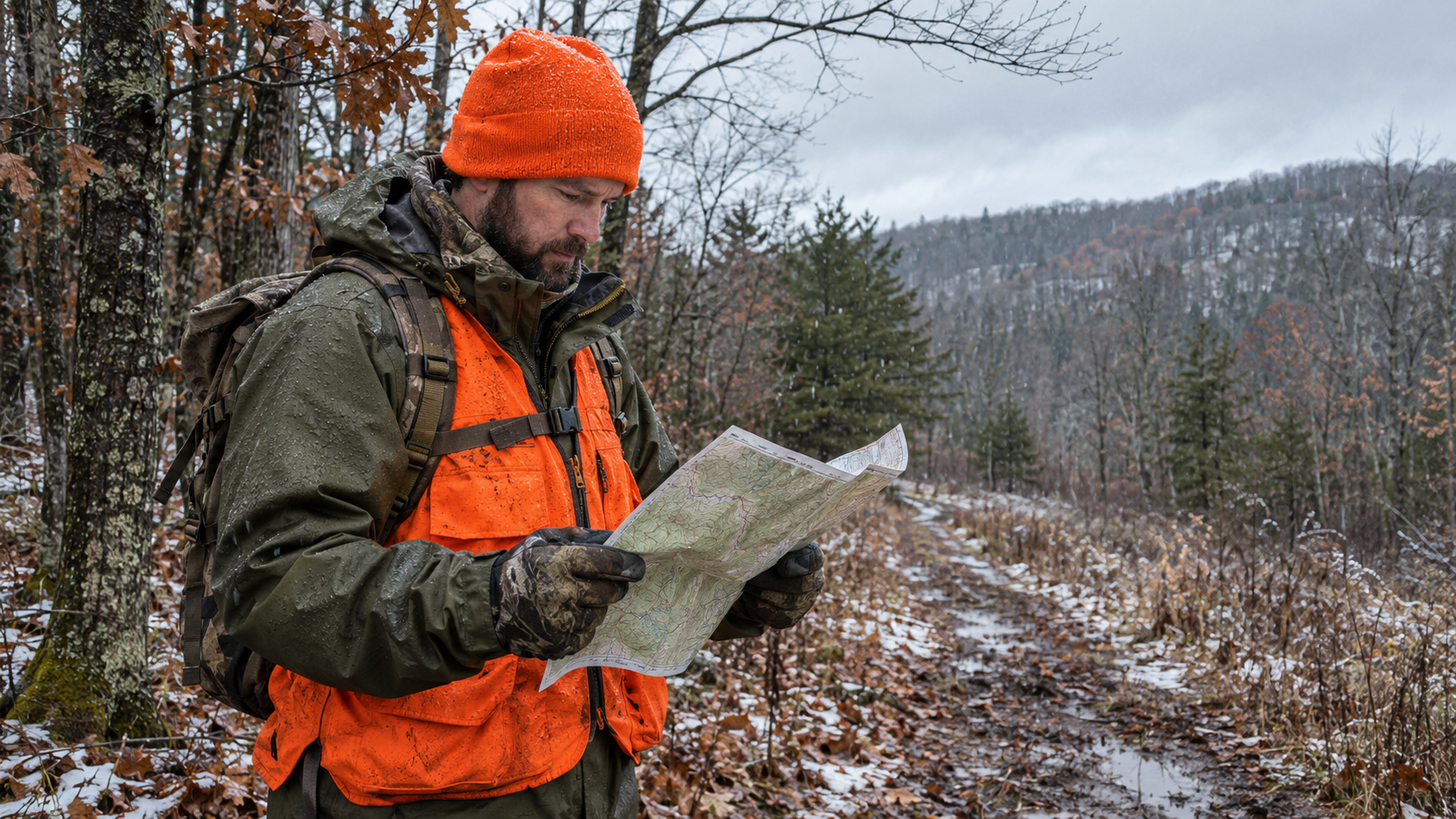
Before a cold morning becomes a difficult afternoon, hunters usually have several chances to change their plans. Rain can soak clothing, wind can complicate movement, and fresh snow can hide a familiar trail. However, hunting in harsh weather calls for more than enthusiasm. A useful plan accounts for the walk back, the condition of your equipment, and the point when staying outside stops making sense.
Read the Forecast Before Choosing Your Route
First, check the forecast for the actual hunting area, including its elevation and exposed terrain. A forecast for a nearby town may miss conditions on a wooded ridge. Look at hourly changes in temperature, precipitation, wind, and visibility. Then compare those changes with your planned arrival and departure times. If conditions will worsen before you can return, shorten the trip or postpone it. Make that decision while you still have reliable information and a comfortable place to reconsider.
Also, identify safe shelter before leaving your vehicle. A hunting blind or tent cannot provide reliable lightning protection. If you hear thunder, head immediately to a substantial building or an enclosed vehicle with a metal roof and closed windows. The National Weather Service advises waiting at least thirty minutes after the last thunder before going outside again. When thunderstorms look likely and shelter sits far away, choose another day rather than counting on reaching safety after the storm arrives.
Manage Moisture Before You Feel Cold
Next, dress for both walking and waiting. An uphill approach can leave you sweating, while an hour of sitting can make the same clothing feel inadequate. Wear a moisture-managing base layer, add insulation, and carry an outer layer that blocks wind and precipitation. Adjust layers before you become soaked with sweat. Keep spare socks and a dry layer inside a waterproof bag, where a leaking pack or brief downpour will not ruin your backup clothing.
Meanwhile, pay attention to small fit problems before they become distractions. Boots should accommodate your socks without squeezing your feet, and gloves should allow you to manage ordinary equipment safely. Test jacket closures, pack buckles, and navigation tools at home while wearing your full outfit. If you cannot operate something comfortably with cold-weather clothing, change the setup before leaving. Comfortable equipment helps you pay attention to your surroundings instead of repeatedly stopping to fix slipping straps or cramped fingers.
Plan the Return Before Walking In
Beyond clothing, make your return route part of the hunt from the beginning. Download maps before losing service, carry a paper backup, and know how to use it. Mark your parking location and identify recognizable junctions. In the field, however, keep your attention on practical navigation: fading tracks and familiar-looking trees can make an uncertain route seem more convincing than it deserves.
Similarly, leave your route and expected return time with someone who can act if you fail to check in. Explain where you plan to park and when they should contact emergency services. Carry a charged phone, protect backup power from moisture, and consider a satellite communication device where cellular coverage is unreliable. Agree on a turnaround time with your hunting partner. Include enough margin for slower walking, an unexpected detour, or difficulty reaching the road.
Adjust Your Decisions to the Conditions
As conditions change, reduce your pace and reassess the ground ahead. Wet roots, loose slopes, and concealed ice deserve more attention than they do on a dry afternoon. Avoid crossing moving water when you cannot judge its depth or footing. A route you crossed earlier may become unsafe after heavy rain. Likewise, do not assume a frozen surface can support you because it looks solid. Take a known alternative or turn around before an uncertain crossing becomes your only option.
Furthermore, treat reduced visibility as a reason to limit what you attempt. Never shoot at movement, a sound, or an outline you cannot positively identify. Confirm your target and what lies beyond it, and pass up any opportunity that leaves doubt. Keep your muzzle pointed safely and your finger away from the trigger until you are ready to fire. If snow, mud, or debris may have entered the barrel, stop and follow the manufacturer’s safe unloading and inspection instructions.
Recognize When the Hunt Should End
Finally, watch your condition as closely as the weather. Persistent shivering, unusual clumsiness, or confusion can signal a serious problem. Stop the hunt, seek shelter, replace wet clothing, and get emergency help if you suspect hypothermia. Cold illness can develop even above freezing, especially when wet conditions increase heat loss. Check your partner as well, since someone struggling may underestimate the situation. Carry food, drinking water, and emergency insulation, but do not let those supplies justify extending an unsafe outing.
Afterward, review what actually happened. Record when your gloves became wet, which trail section slowed you down, and whether your planned return time allowed enough margin. Dry equipment according to its care instructions and replace supplies before your next trip. For example, if a short walk took twice as long in mud, adjust future turnaround times accordingly. Use your own observations to improve the next plan instead of assuming better conditions will compensate. Above all, carry the practical lessons forward: start with a realistic plan, respond early when conditions change, and leave yourself enough time and energy to get home safely.