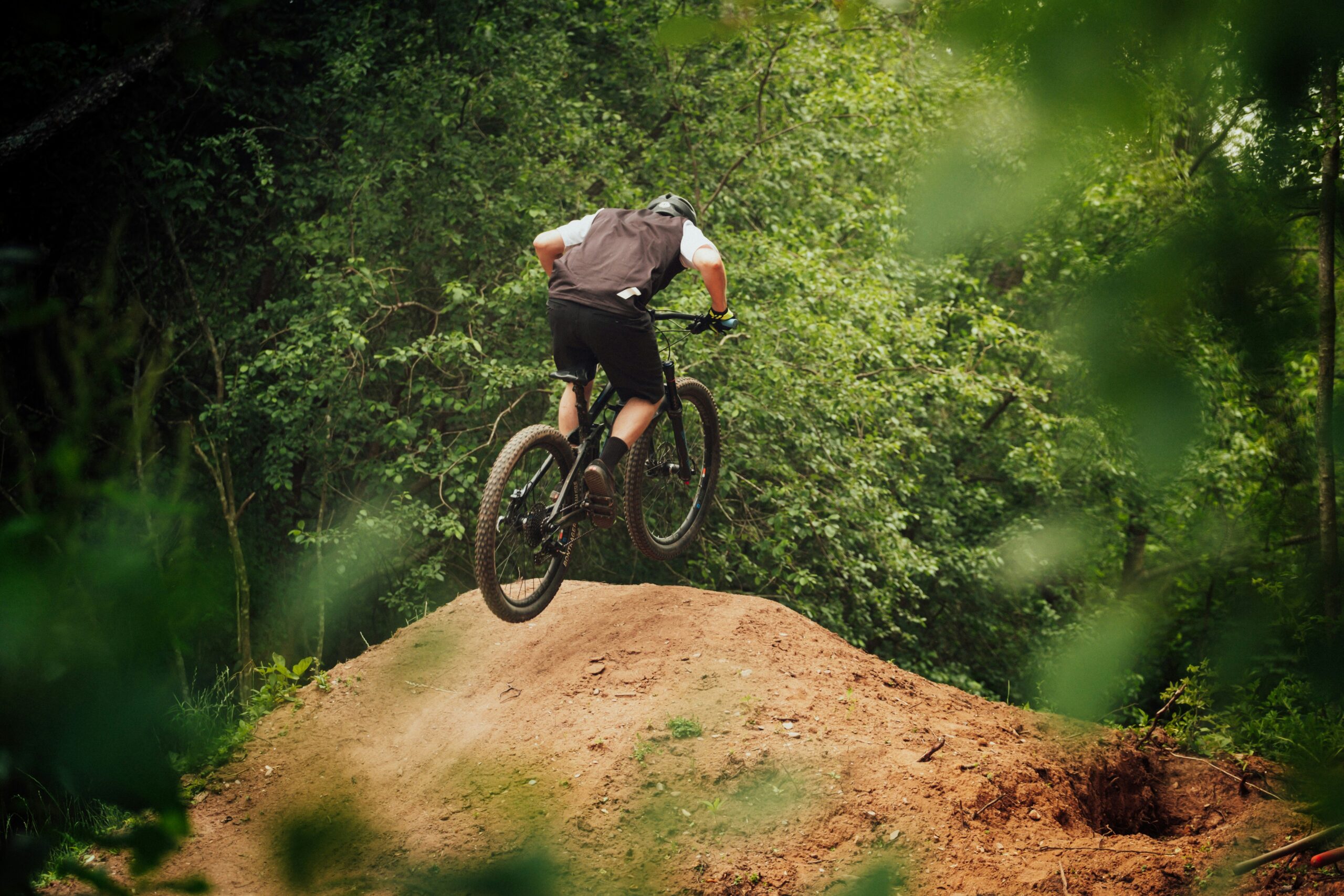
Good trail riding technique also reduces wasted movement and unnecessary braking. Instead of fighting the bike, skilled riders guide it with deliberate inputs. That approach saves energy while improving balance across rocks, roots, corners, and steep sections. More importantly, better control creates the confidence needed for steady progress in mountain biking.
The following five mountain bike hacks focus on practical adjustments with lasting value. Each one strengthens your relationship with traction, balance, and terrain. Together, they create a smarter system for riding challenging trails with greater precision.
Build Mountain Bike Control With Better Body Position
Meanwhile, keep your head up and look farther down the trail. Your eyes guide your decisions before your hands make corrections. Better vision gives you more time to adjust speed, line, and body position. As a result, your movements become proactive rather than rushed.
This balanced mountain bike body position works across many trail conditions. Practice it on easy terrain before applying it at higher speeds.
Improve Trail Riding Technique Through Smarter Braking
Use both brakes smoothly while the bike travels straight whenever possible. Apply stronger braking before corners, technical drops, or loose sections. Then release pressure gradually as you enter the feature. This approach allows the tires to regain traction for steering.
Front braking deserves special attention because the front tire provides substantial stopping power. However, aggressive use of the front brakes during turns can overload the available grip. Therefore, separate heavy braking from sharp steering whenever trail space allows.
Another useful mountain biking tip is to brake earlier than feels necessary. Early braking creates decision time and protects momentum later. Consequently, you can exit corners faster without entering them beyond your control.
Controlled braking also reduces fatigue because your hands stop fighting constant emergency situations. With practice, braking becomes a precise speed-management tool instead of a fear response.
Choose Lines That Support Better Bike Handling
Strong riders do not simply react to obstacles. They scan ahead and choose lines that make difficult terrain more manageable. Line choice is therefore one of the most valuable mountain bike hacks for improving control.
Additionally, consider the entire sequence rather than one isolated rock or root. A slightly slower entry may create a cleaner exit. Likewise, crossing a root at a stronger angle can preserve traction and reduce wheel deflection.
Better bike handling comes from planning these small decisions early. When riders wait too long, they often make sharp steering corrections. Those corrections disturb balance and increase the chance of losing grip.
Eventually, smart line choice feels less like calculation and more like instinct. That instinct develops through deliberate observation, repetition, and honest review.
Use Tire Pressure to Increase Mountain Bike Control
Tire pressure has a major influence on grip, comfort, and steering response. Yet many riders rarely adjust it for terrain. That oversight can make a capable bike feel unpredictable.
Lower pressure generally increases the tire’s contact with the ground. Therefore, it can improve traction on roots, rocks, and loose surfaces. However, pressure that drops too low can cause rim strikes, tire squirm, or burping on tubeless systems.
Higher pressure may roll efficiently, but excessive pressure can reduce grip and create harsh feedback. The correct setting depends on rider weight, tire volume, casing, rim width, terrain, and riding style.
Start with a reliable baseline, then make small adjustments between rides. Change only one variable at a time. This method helps you understand how tire pressure affects mountain bike control.
Record useful settings for different trail types. Over time, those notes become a practical setup guide tailored to your riding.
Create More Grip by Staying Light on the Bike
Control does not always come from pushing harder into the trail. Sometimes, the best response is allowing the bike to become lighter. This skill helps wheels move across rough terrain without getting trapped by every obstacle.
On smoother sections, apply pressure strategically to create grip through corners or compressions. Therefore, effective riding involves alternating between lightness and pressure. The goal is not constant force, but well-timed force.
This technique improves mountain bike control it reducing abrupt impacts and preserving momentum. It also helps riders stay balanced when the trail becomes unpredictable.
Practice these movements on familiar trails at moderate speed. Gradually, you will recognize when the bike needs support and when it needs freedom.
Turn These Mountain Bike Hacks Into Reliable Skills
Mountain bike control grows through deliberate practice, not isolated tricks. Each improvement should be integrated into a connected riding system. Body position supports braking, braking supports line choice, and line choice protects traction. Meanwhile, tire setup and dynamic movement help the bike respond predictably.
Choose one skill during each practice ride instead of trying everything simultaneously. For example, spend one session improving vision and line choice. Then dedicate another ride to smoother braking or active body movement. This focused approach makes feedback easier to recognize.
Most importantly, measure progress through consistency rather than speed alone. Better trail riding technique should make difficult sections feel calmer and more repeatable. When control improves, speed often follows naturally because hesitation and unnecessary corrections decrease.
These five mountain bike hacks create a practical foundation for better bike handling. Apply them patiently, review what changes, and refine your technique over time. Greater control comes from making better decisions before the trail forces them.